
Saint-Malo is the one Portsmouth arrival port you will want to stay in. The walled old town is a short walk from the ferry terminal, you can walk the whole circuit of the walls, swim in a seawater pool with a diving board right beneath them, and eat seafood on terraces tucked against the granite. We spent two days here and the town was a genuinely good surprise. This guide covers how the town fits together, what to do, how the tides rule the day, the corsair history and how to eat seafood well. If you are still choosing a crossing, the Portsmouth to Saint-Malo ferry page has the times, the ship and the booking.
How Saint-Malo fits together
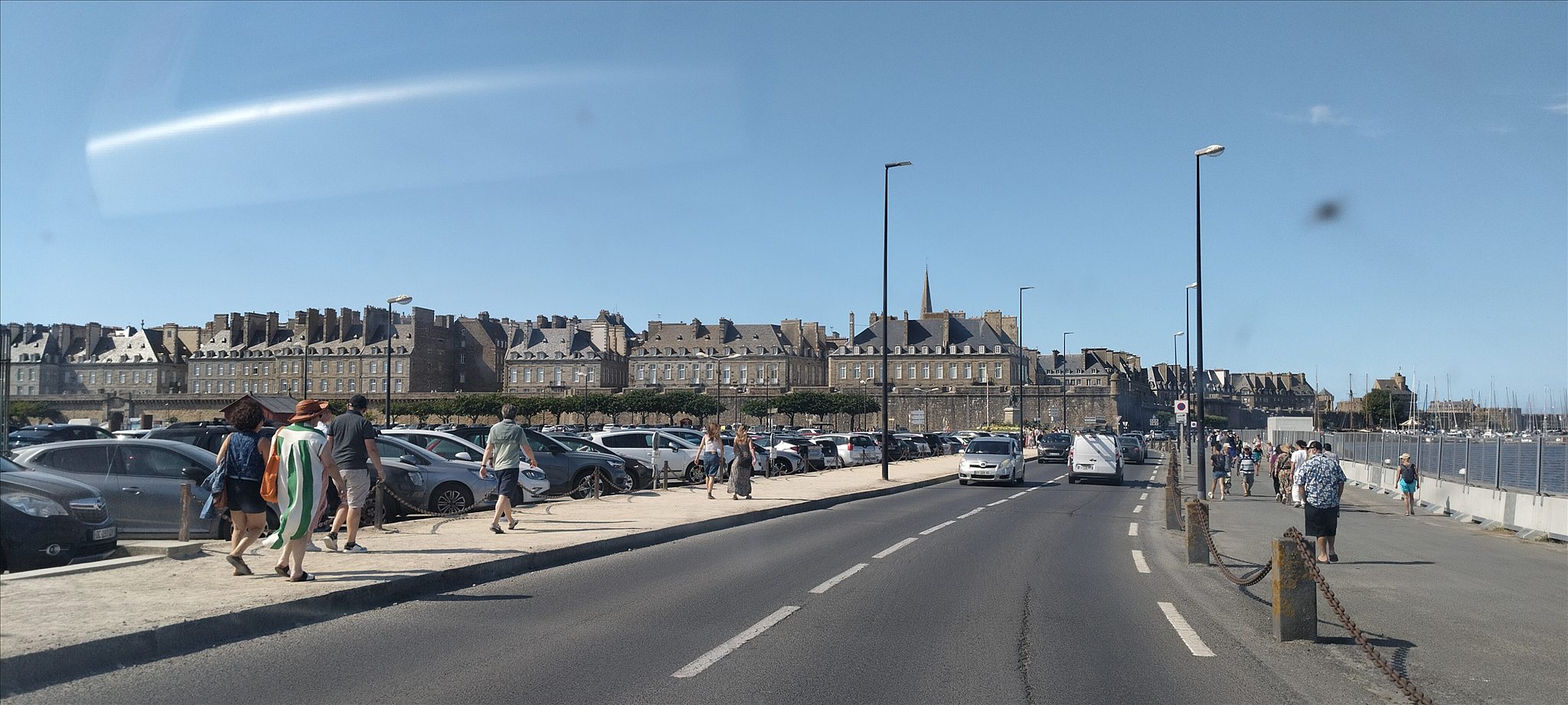
People say Intra-Muros, meaning inside the walls, and extra-muros, meaning everything outside them. Intra-Muros is the old town you are picturing: granite streets, a castle at the gate, a cathedral, and ramparts you can walk on. It is small enough to cover on foot in an afternoon. It is also newer than it looks: the town was badly damaged in 1944 and rebuilt, with the ramparts restored and the facades of the old shipowners’ houses rebuilt identically.
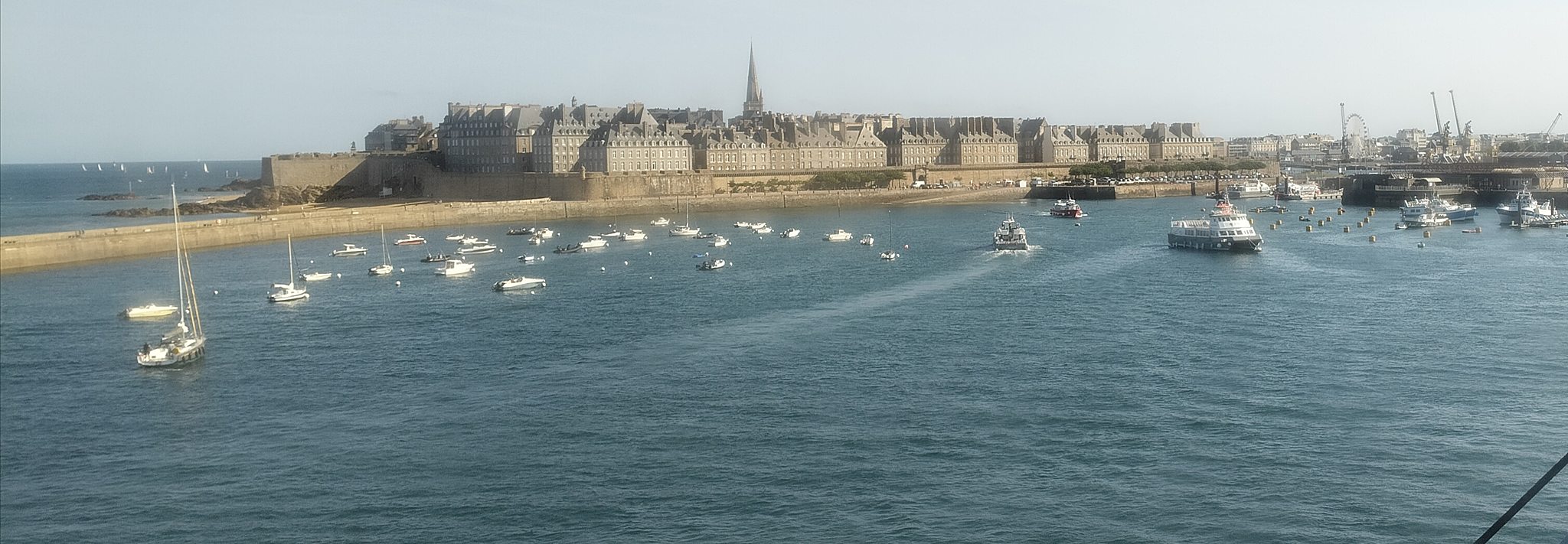
Outside the walls there are three areas worth knowing:
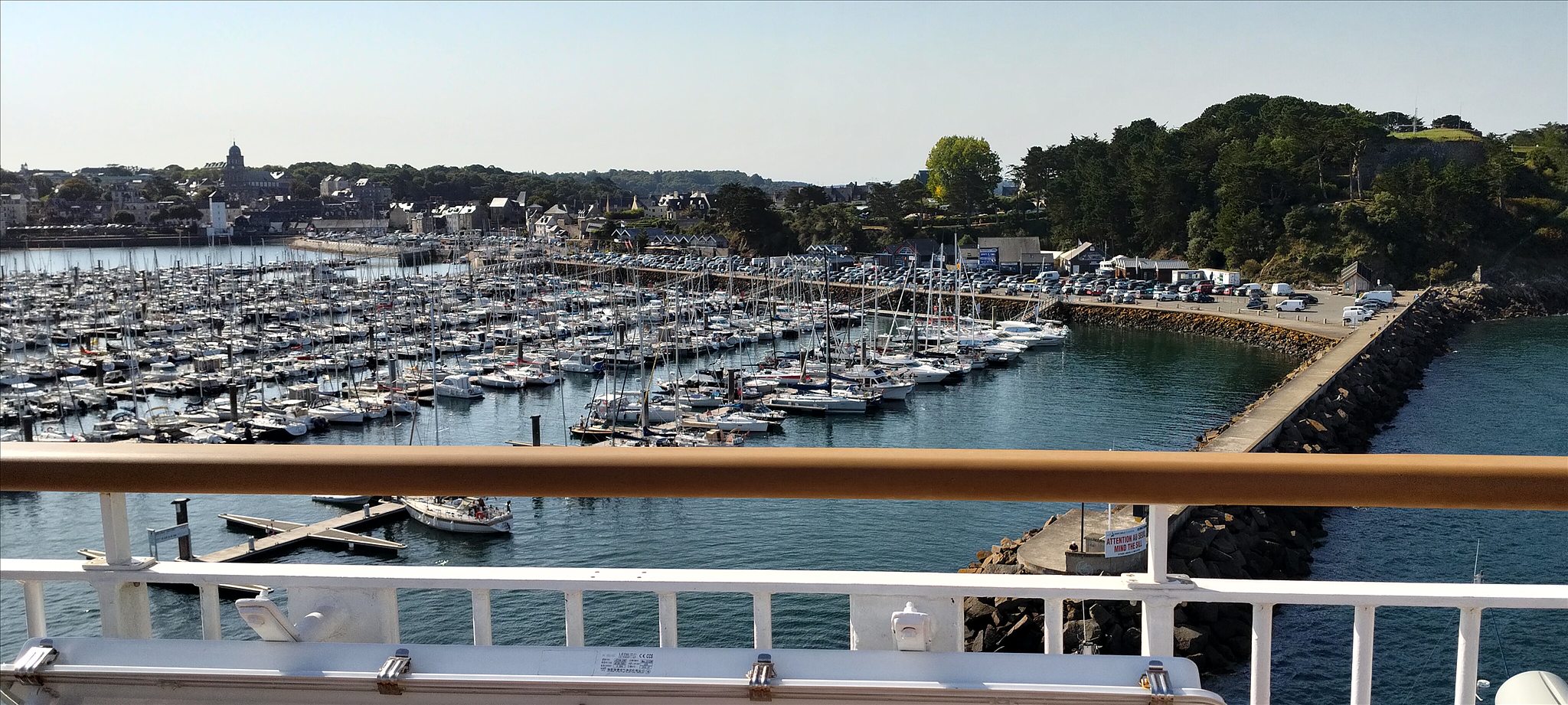
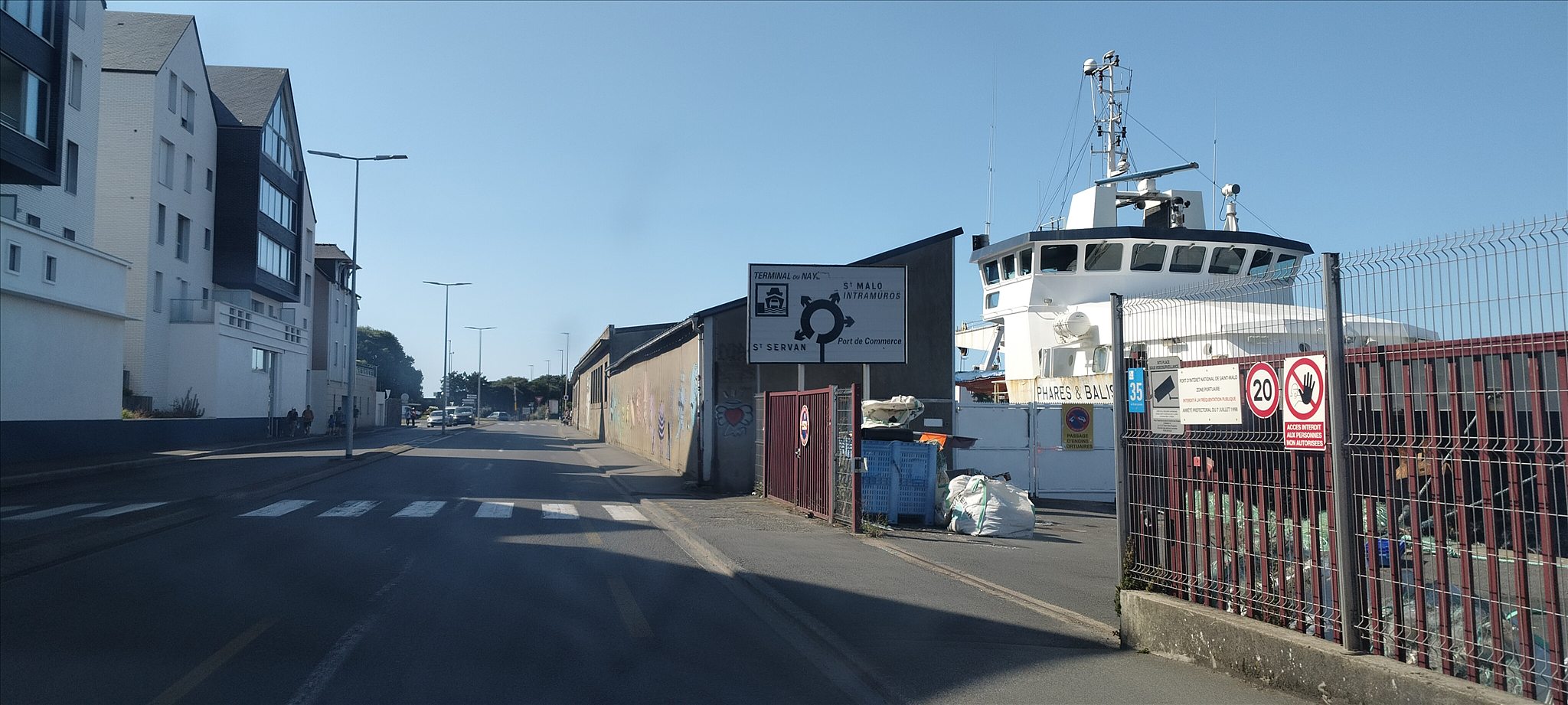
- Saint-Servan, to the south. The ferry terminal, the Gare Maritime du Naye, is here, about ten minutes from the walls. So are the Tour Solidor and the Cité d’Alet, the area where Saint-Malo began.
- Paramé and the Sillon, to the east. A long beach running east from the walls, with the Paramé district behind it.
- Rothéneuf, further east along the coast. Further out, and easiest with a car.
All the places on the map, as a list
Ferry
- Gare Maritime du Naye. The ferry terminal, about ten minutes on foot from the walls.
Walls and gates
- Porte Saint-Vincent. The main gate into Intra-Muros. The castle is the first thing you reach.
- Grande Porte. One of the gates in the ramparts.
- Porte de Dinan. The gate on the south side of the old town.
History
- Castle and Quic-en-Groigne tower. 15th century, four corner towers around a keep 35 metres high. Now the town hall.
- Duchess Anne's House. A late medieval townhouse near the castle.
- Cathédrale Saint-Vincent. A cathedral since 1146. The tombs of Jacques Cartier and Duguay-Trouin are inside.
- Cité d'Alet. In Saint-Servan: where the story of Saint-Malo begins.
- Tour Solidor. The tower at the mouth of the Rance, in Saint-Servan.
- Fort National. One of the four forts on islets. Reached on foot at low tide.
Sea and beaches
- Bon-Secours pool and beach. Seawater pool with a diving board, built in 1937 and refilled by every tide.
- Plage de l'Éventail. A small beach on the north side of the old town.
- Plage du Sillon. The long beach running east from the walls.
Where we stayed
- Hotel Les Chiens du Guet. Our hotel for two nights, on the Place du Guet: a budget hotel, noisy, authentic and very much a bistro. The fruits de mer was excellent. See the hotel on the tourist office site
Map data from OpenStreetMap.
Walk the ramparts
The ramparts run for 1,754 metres around the old town, built in two main stages: the older enclosure from the Middle Ages to the end of the 17th century, and additions made between 1708 and 1744. Walking the full circuit takes about half an hour if you do not stop, and a lot longer if you do, which you will. On one side you look out over the beaches, the forts on their islets and, across the bay, Dinard. On the other you look down into the rooftops of the old town.
Come in through the Porte Saint-Vincent and the first thing you reach is the castle. It dates from the 15th century and has four corner towers around a keep 35 metres high, and today it houses the town hall. One of the towers, the Quic-en-Groigne, is named after an inscription, later erased in the Revolution, saying it was built on the orders of Anne of Brittany against the advice of the people of Saint-Malo. Near the castle is the Duchess Anne’s House, a late medieval townhouse, and a little further in, the Cathédrale Saint-Vincent. It has been a cathedral since 1146, took nearly seven centuries to finish, and holds the tombs of Jacques Cartier and Duguay-Trouin.
The sea pool, the beach and the tides
Take the ramparts to the west side of the town and you come out above the Plage de Bon-Secours. It is a sandy beach right against the walls, which is unusual for a walled town, and it has one of the more unusual things you can do in Brittany: a seawater swimming pool with a diving board, built into the beach in 1937 by René Lesaunier. The water in the pool is renewed with every tide, twice a day, so you can swim there even when the sea itself has gone out. In summer there is a lifeguard station, and the beach has a bar, a restaurant, toilets and showers. Dogs are not allowed on the beach from April to September. Even if you do not swim, it is worth walking down for the view over the bay to Dinard, with the Grand Bé islet in the foreground and the fort on the Petit Bé behind it.
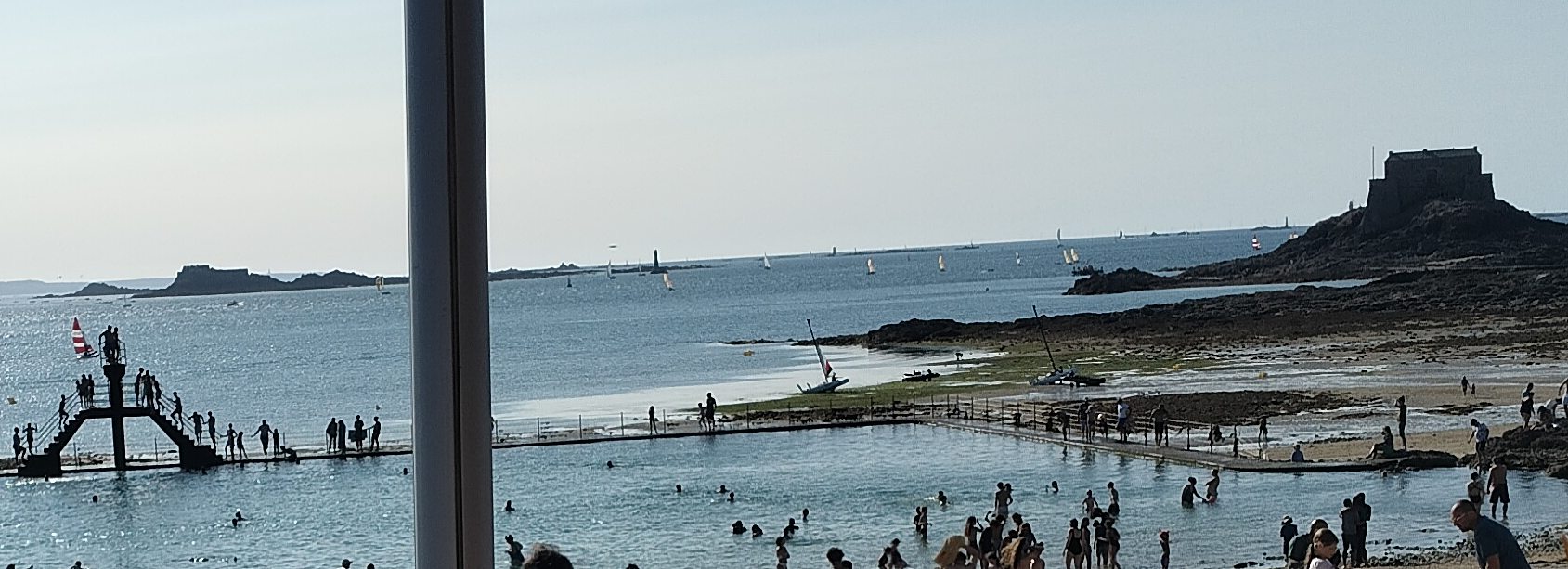
There are other beaches too. The Plage de l’Éventail is a small beach on the north side of the old town, and the long Plage du Sillon starts just outside the walls to the east. All of them are tidal, which is the thing to understand about Saint-Malo before you plan a day.
Check the tide before you plan anything
The tide here is big. On the tourist office’s table for 1 November 2026, low water was 3.66 metres at 05:30 and high water 10.26 metres at 11:03, a swing of 6.6 metres in about five and a half hours. The table also gives a coefficient for each high tide, running from about 24 to 112 across the year: the higher the coefficient, the bigger the tide and the further the sea goes out. At low tide you can walk across the sand to the Grand Bé, where the writer Chateaubriand is buried, and to some of the forts on their islets. How far and for how long depends on the times and the coefficient. Tides come back in fast, so look up the times, note when the water turns, and leave early. The tourist office publishes the Saint-Malo tide tables.
The corsair city
Saint-Malo is called the corsair city, and the word matters. Corsairs were privateers, sailors licensed by the crown to attack enemy ships, not pirates, and the town got rich on them. Its pride showed early: for four years, from 1590 to 1594, Saint-Malo ran itself as a republic, with the motto “Neither French nor Breton, Malouin am!” Jacques Cartier and Duguay-Trouin are buried in the cathedral, and Robert Surcouf is one of the other names the town still celebrates.
You can still see where the money went. The 18th century shipowners’ houses, called the Maisons de Corsaires, stand along the ramparts between the Saint-Philippe and Saint-Louis bastions, and most of their facades were rebuilt identically after 1944. The bay itself was fortified from the 17th century by the engineer Garangeau, working from Vauban’s plans. Four forts stand on islets, la Conchée, Fort National, the Fort du Petit Bé and Fort Harbour, with the island of Cézembre as a bastion too. The tourist office notes that the enemy often came from England, which is worth remembering as you sail in from Portsmouth.
Saint-Malo in a book and on screen
Anthony Doerr’s novel All the Light We Cannot See, published in 2014, is set in Saint-Malo during the 1944 siege and battle for the town, and Doerr has said he wanted every little detail of Saint-Malo to be accurate. If you have read it, the walls, the rebuilt streets and the beach below them make more sense on foot. The 2023 Netflix series is a different story: according to its production designer, only the beach and aerial shots were filmed in Saint-Malo, while the town’s streets were filmed in Villefranche-de-Rouergue in south west France. Netflix explains how in its piece Did All the Light We Cannot See Really Film in Saint-Malo?
Eating seafood in Saint-Malo
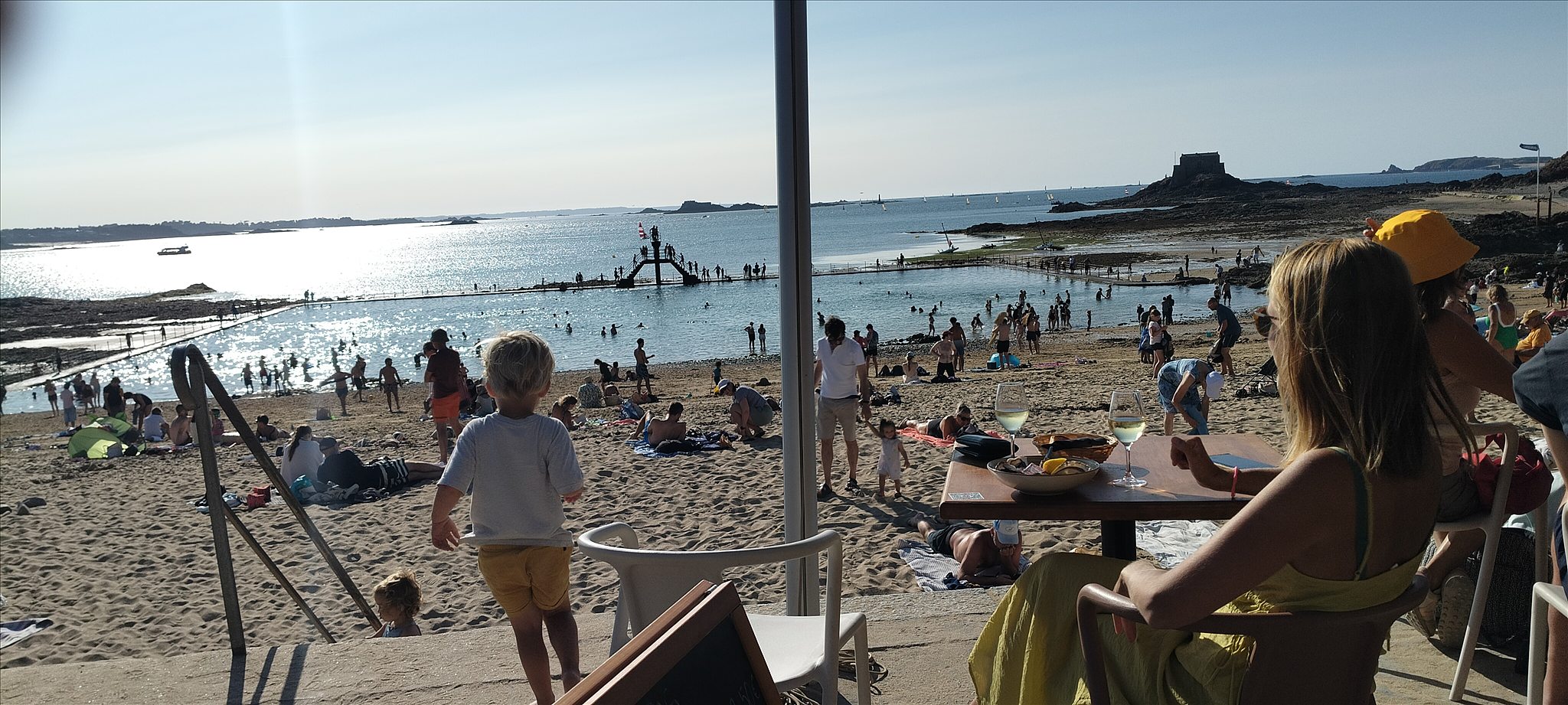
This is oyster and shellfish country. Oysters from Cancale, a short way along the coast, are recognised as part of France’s intangible cultural heritage, and the Bay of Mont-Saint-Michel produces PDO mussels. In Saint-Malo that turns up as fruits de mer: seafood served cold on a platter. The terraces tucked against the town walls are the postcard version of eating it, and in good weather they are hard to beat.
What to order
- A plateau de fruits de mer to share. It is a platter of shellfish on ice, usually oysters, prawns, whelks and winkles, and crab, with lemon, mayonnaise and bread. One platter for two lets you taste everything without ordering six separate things.
- Oysters, plain first. Ask for huîtres de Cancale. French oysters are graded by number, and the smaller the number, the bigger the oyster. Eat the first one with nothing, then add lemon, or the shallot and vinegar sauce called mignonnette, with bread and salted butter on the side.
- Mussels from the bay. Moules de la baie du Mont-Saint-Michel are the local PDO mussels, and the easiest hot seafood dish to order with confidence.
- Scallops in the colder months. If coquilles Saint-Jacques are on the board, order them.
Tips that save money and disappointment
- If the price says selon arrivage or prix du jour, the price depends on what came in that day. Ask before you order, especially for a platter.
- Lunch is cheaper. Many restaurants in France offer a set lunch menu, a formule, and a long seafood lunch beats a rushed dinner.
- Drink what the region drinks. A dry white wine such as Muscadet goes with oysters, and Breton cider, served in a bowl, goes with almost everything else.
- Terraces on the ramparts fill up in July and August and at weekends. Book, or go early.
- Not a shellfish person? Brittany is also the home of the buckwheat galette, a savoury pancake, and of crêperies on almost every street.
We have not put a list of restaurants here on purpose. Menus, owners and standards change, and a list we cannot keep checked is worse than none. The one place we can vouch for is where we stayed, Hotel Les Chiens du Guet (see below), where the fruits de mer was excellent. The tourist office keeps a list of restaurants in the historic district, and in practice the best way to choose is to walk past, read the menu on the board and look at what is on the plates. For oysters at the source, go to Cancale (see Nearby below).
Where to stay
We stayed two nights at Hotel Les Chiens du Guet, inside the walls on the Place du Guet, right by the Bon-Secours beach and the pool. It is a budget hotel, noisy, authentic and very much a bistro: you have to like that, and we do. For one or two nights it suits us, and the fruits de mer we ate there was excellent. If you want quiet and polish, look elsewhere. Here is how to choose:
- Inside the walls if you want the atmosphere and the shortest walk to the ramparts, the cathedral and the beach. Cars are restricted in the old town, so ask the hotel where to park before you book.
- Saint-Servan if you want it quieter, with the ferry terminal on your doorstep and the Cité d’Alet nearby. The old town is still a walk away.
- Paramé and the Sillon if the beach matters more than the walls, though you will be further from the old town.
Book early for July and August. If you take the overnight ferry, you land at 08:45, well before any check-in time, so ask the hotel whether they can hold your bags.

Two days in Saint-Malo
Two days is the right amount, and the order depends on the tide, so look up the times first.
- Day one. Walk from the terminal to the Porte Saint-Vincent, see the castle, then walk the full circuit of the ramparts. Have lunch inside the walls. In the afternoon go down to Bon-Secours for the beach and the pool. In the evening, a seafood dinner on a terrace against the walls.
- Day two. Start with the tide. At low water, walk out to the Grand Bé. Then head south to Saint-Servan for the Tour Solidor and the Cité d’Alet, or take a day trip (see below). Leave time for a last galette and cider.

Nearby, if you have a car or a day
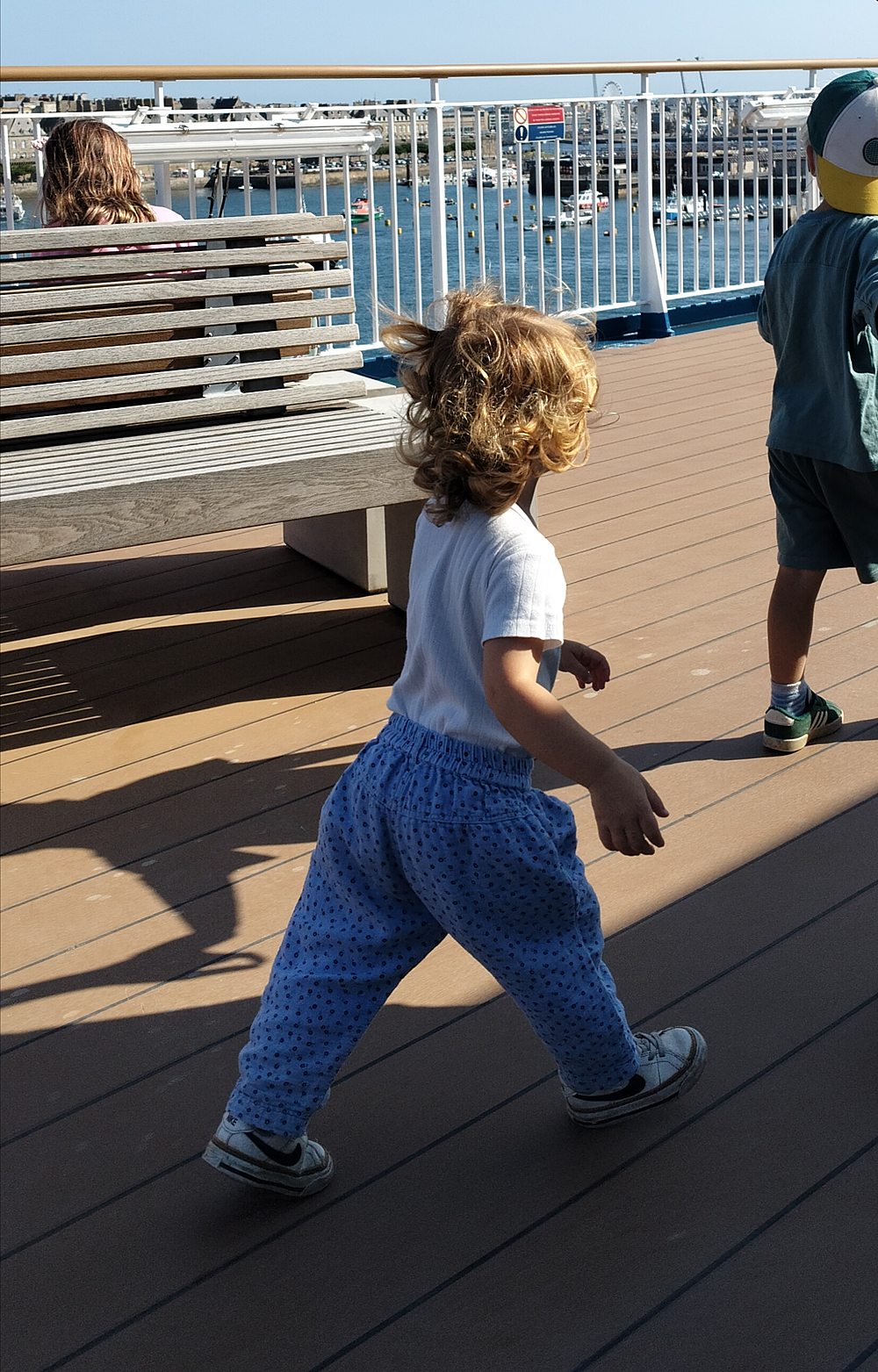
- Dinard sits across the estuary, close enough to see from the ferry as you sail in.
- Cancale is the oyster port along the coast, and the place to eat oysters near where they are grown. You can also visit the oyster beds.
- Dinan is a walled medieval town about 31 minutes by road.
- Mont-Saint-Michel is about 1 hour 15 minutes by road.
- Rennes is about 56 minutes by road.
The drive times come from our own calculator and assume no traffic; the full list is in driving from Saint-Malo.
Getting there from Portsmouth
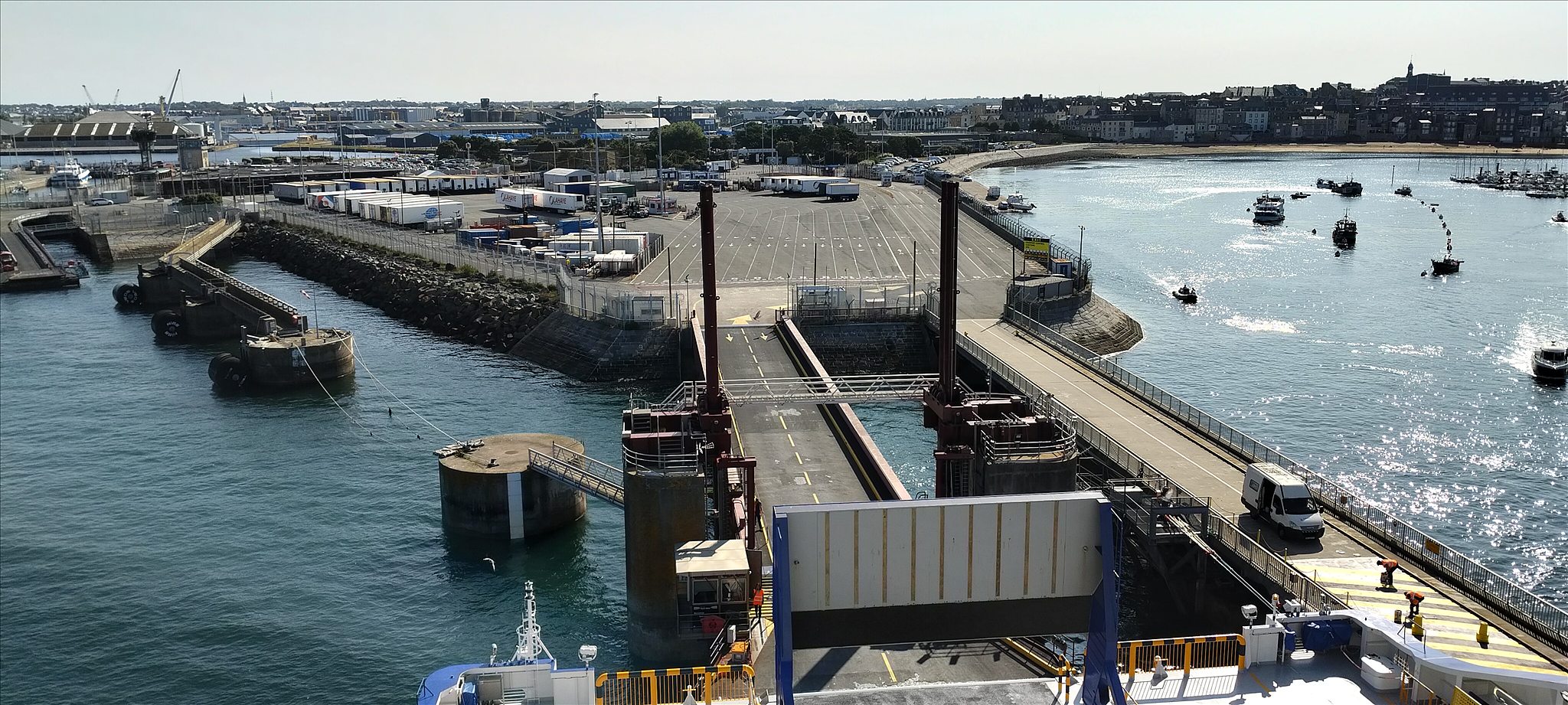
Brittany Ferries sails Portsmouth to Saint-Malo overnight, about eleven and a half hours, landing at 08:45. This winter that is four nights a week, and every night in summer. The way home is a daytime sailing leaving at 10:45 on Mondays this winter and every day in summer; on the other winter days it sails overnight. You can see the exact days for any date with our date finder. The terminal is about ten minutes on foot from the walls, so foot passengers can walk straight into the old town with a bag. A passport is needed both ways, and for the way home to the UK you also need an ETA unless you hold a British or Irish passport.
FAQs
Is Saint-Malo worth a stop or is it just a port?
It is worth a stop. It is one of the few Portsmouth ferry ports that is a place you want to stay. We spent two days there and the town was a better surprise than we expected.
How many days do you need in Saint-Malo?
Two days covers the walls, the beach and pool, the tide walk to the Grand Bé, Saint-Servan and a couple of long seafood meals. One day is possible. Anything over three needs day trips.
Can I walk from the ferry to the old town?
Yes. The ferry terminal, the Gare Maritime du Naye, is about ten minutes on foot from the walls of Intra-Muros.
Do I need a car in Saint-Malo?
Not in the town itself, where everything is within walking distance. A car helps for Dinan, Cancale and Mont-Saint-Michel. Cars are restricted inside the old town, so ask your hotel about parking.
Can you swim in the sea pool at Bon-Secours?
Yes. It is a seawater swimming pool with a diving board, built in 1937 and refilled with every tide. There is a lifeguard station in summer. Dogs are not allowed on the beach from April to September.
Where did you stay in Saint-Malo?
At Hotel Les Chiens du Guet, inside the walls on the Place du Guet, by the Bon-Secours beach. It is a budget hotel and a noisy, authentic bistro: good for one or two nights if you like that, less so if you want quiet.
Is it safe to walk out to the Grand Bé?
At low tide, yes, but the tide comes in fast. Check the tide table, note when the water turns, and leave in good time.
What seafood should I try?
Oysters from Cancale, a plateau de fruits de mer to share, and mussels from the Bay of Mont-Saint-Michel. In the colder months, also scallops.
Facts about the town come from the Saint-Malo tourist office (saint-malo-tourisme.co.uk), Netflix and our own two days there, and were checked on 6 November 2026. Opening hours and tide times change, so check them before you go. The photos are our own, from August 2025.
Some links on this page are affiliate links: if you book, we may earn a commission, at no extra cost to you. How that works.